| Trees available in tube-stock | |||
| Scientific name | Common name | Height (m) | |
| Acacia dealbata | Silver Wattle | up to 30 | |
| Acacia implexa | Lightwood | 5 to 15 | |
| Acacia mearnsii | Black Wattle | 20 | |
| Acacia melanoxylon | Blackwood | up to 30 | |
| Allocasuarina littoralis | Black Sheoak | 8 | |
| Allocasuarina verticillata | Drooping Sheoak | 10 | |
| Eucalyptus cephalocarpa | Silver-leaved Stringybark | 20 | |
| Eucalyptus goniocalyx | Long-leaved Box | 15 | |
| Eucalyptus leucoxylon ssp. connata | Yellow Gum | 20 | |
| Eucalyptus melliodora | Yellow Box | 30 | |
| Eucalyptus ovata | Swamp Gum | 25 | |
| Eucalyptus polyanthemos | Red Box | 25 | |
| Eucalyptus radiata | Narrow-leaved Peppermint | 30 | |
| Eucalyptus tricarpa | Red Ironbark | 30 | |
| Eucalyptus viminalis | Manna Gum | 50 | |
| Eucalyptus yarraensis | Yarra Gum | 15 | |
| Banksia marginata | Silver Banksia | 10 | |
| Tall shrubs available in tube-stock | |||
| Scientific name | Common name | Height (m) | |
| Acacia acinacea | Gold-dust Wattle | 2 | |
| Acacia brownii | Heathe Wattle | 0.3-1 | |
| Acacia paradoxa | Kangaroo Thorn | 2 to 3 | |
| Acacia retinodes | Swamp Wattle | 6 | |
| Acacia verticillata | Varnish Wattle | 5 to 10 | |
| Callistemon sieberi | River Bottlebrush | up to 5 | |
| Coprosma quadrifida | Prickly Currant Bush | 2 to 4 | |
| Goodenia ovata | Hop Bush | 2 | |
| Grevillea rosmarinfolia | Rosemary Grevillea | 2 | |
| Gynatrix pulchella | Hemp Bush | 3 | |
| Hakea decurrens subsp physocarpa | Bushy Needlewood | up to 5 | |
| Kunzea leptospermoides | Burgan | 3 | |
| Leptospermum continentale | Prickly Tea-tree | 1 to 2 | |
| Leptospermum lanigerum | Woolly Tea-tree | 3 | |
| Melicytus dentatus | Tree Violet | 4 | |
| Myoporum insulare | Boobialla | 6 | |
| Myoporum petiolatum | Sticky Boobialla | 2 | |
| Myrsine howittiana | Muttonwood | 3 to 10 | |
| Olerea argophylla | Musk Daisy-bush | 3 to 10 | |
| Ozothamnus ferrugineus | Tree Everlasting | 2 to 5 | |
| Pomaderris aspera | Hazel Pomaderris | 3 to 15 | |
| Pomaderris lanigera | Woolly Pomaderris | 1 to 5 | |
| Pomaderris prunifolia | Plum-leaf Pomaderris | 1 to 4 | |
| Pomaderris racemosa | Slender Pomaderris | 2 to 5 | |
| Pomaderris vaccinifolia | Round-leaf Pomaderris | 3 to 4 | |
| Prostranthera lasinthos | Victorian Christmas Bush | up to 10 | |
| Solanum laciniatum | Large-flowered Kangaroo Apple | up to 3 | |
| Spyridim pavifolium | Kangaroo Apple | 1 | |
| Trees and Shrubs available in 6'' pots | |||
| Scientific name | Common name | Height (m) | Number available (13/7/15) |
| Acacia dealbata | Silver Wattle | up to 30 | 4 |
| Acacia mearnsii | Black Wattle | 20 | 10 |
| Acacia retinodes | Swamp Wattle | 6 | 4 |
| Acacia verticillata | Varnish Wattle | 5 to 10 | 5 |
| Allocasuarina littoralis | Black Sheoak | 8 | 2 |
| Allocasuarina verticillata | Drooping Sheoak | 10 | 10 |
| Coprosma quadrifida | Prickly Currant Bush | 2 to 4 | 8 |
| Eucalyptus polyanthemos | Red Box | 25 | 10 |
| Eucalyptus tricarpa | Red Ironbark | 30 | 28 |
| Eucalyptus viminalis | Manna Gum | 50 | 10 |
| Eucalyptus camaldulensis | River Red Gum | 20 | 26 |
| Gynatrix pulchella | Hemp Bush | 3 | 16 |
| Hakea decurrens | Bushy Needlewood | up to 5 | 2 |
| Leptospermum continentale | Prickly Tea-tree | 1 to 2 | 5 |
| Melaleuca ericifolia | Swamp Paperbark | 4 to 9 | 6 |
| Ozothamnus ferrugineus | Tree Everlasting | 2 to 5 | 2 |
| Pomaderris aspera | Hazel Pomaderris | 3 to 15 | 30 |
Sunday, 12 July 2015
Trees and Shrubs available

Sunday, 5 July 2015
National Tree Day 2015
2015 marks the 20th annual National Tree Day (July 26th) and Schools Tree Day (July24th). National Tree Day is Australia's largest community tree planting event. Last year, almost 300,000 people participated and 1.4 million native trees and other plants were planted.
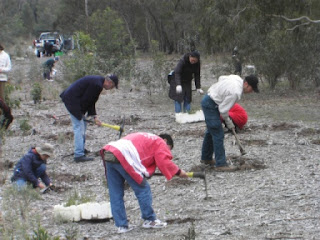
This year, the La Trobe Wildlife Sanctuary is getting involved and running a number of activities including kid's activities, an indigenous plant workshop, tree planting, tree sale and plant giveaways (more details below). Trees (and other plants) that are indigenous to north-east Melbourne are available for sale in our indigenous plant nursery. The nursery is open from 10am until 3pm Sunday through Friday. Schools ordering plants for Schools Tree Day are entitled to a discount.
National Tree Day activities at the La Trobe Wildlife Sanctuary:
Resources for schools and gardeners:
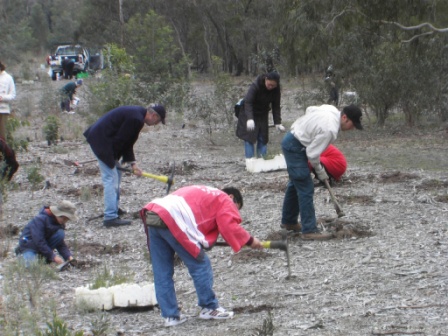
This year, the La Trobe Wildlife Sanctuary is getting involved and running a number of activities including kid's activities, an indigenous plant workshop, tree planting, tree sale and plant giveaways (more details below). Trees (and other plants) that are indigenous to north-east Melbourne are available for sale in our indigenous plant nursery. The nursery is open from 10am until 3pm Sunday through Friday. Schools ordering plants for Schools Tree Day are entitled to a discount.
 |
| Lightwood Wattle - Acacia implexa |
National Tree Day activities at the La Trobe Wildlife Sanctuary:
- Plant Giveaway - plants will be given away throughout the day at our indigenous plant nursery, open from 10am-3pm
- Tree Sale - trees and shrubs will be discounted at our indigenous plant nursery, open from 10am-3pm. Species available listed here.
- Kid's activity (11am) - discover the tiny creatures that live in native grass and create your own native grass to take home
- Tree planting activity (12pm) - we will plant indigenous trees and shrubs around the La Trobe Wildlife Sanctuary depot area
- Indigenous Plant workshops (1:30pm) - learn about gardening with indigenous plants and providing habitat for native animals
- The La Trobe Wildlife Sanctuary will be open from 10am-3pm for bush walks, bird watching etc.
 |
| Grevillea rosmarinifolia |
Resources for schools and gardeners:
- Aboriginal plant list
- Butterfly attracting plants
- Bird attracting plants
- Spectacular flowering indigenous plants
- Indigenous Trees
- Indigenous Grasses
- Plants for a sensory garden
- School yard plants
Sunday, 1 February 2015
Retail Open 6 Days
.jpg) |
| We are Open for Business |
We are Open!
.jpg) |
| BioBlitz 2015 |
 The Sanctuary Retail Shop (Selling Indigenous plants and nesting boxes) is now open for business 6 Days a week!
 10am - 3pm Every day except Saturday.
Come in and see our fantastic, knowledgeable staff and start designing your own habitat patch or Indigenous display garden now.
While your at it - why not go for a walk through the sanctuary and help us with our BioBlitz - you can help us discover the little critters that live in the Sanctuary.
Visit our Website
2015 Little Creature BioBlitz
 This January to April - we would like our visitors to
tune in to all the little critters in the sanctuary and tell us about
what they find.
This January to April - we would like our visitors to
tune in to all the little critters in the sanctuary and tell us about
what they find. Simply take photos of the small animals (macro invertebrates) you come across while in the sanctuary and upload them to the link below.
http://bit.ly/1ynV4SV
Competition
Tell us what these little critters are for your chance to win a Twilight Tour Entry.email to enter
Visit the Sanctuary
Thursday, 15 January 2015
School Holidays - Twilight Tours
 |
| A Sugar Glider in a Nesting Box |
Twilight Tours are scheduled on Wednesday evenings during the school holidays and on the third Wednesday of every month outside holidays. The next tour is scheduled for 21st January.
 |
| Xerochrysum viscosum in flower. |
Monday, 1 December 2014
Australian Animals Habitat Incursion F-2: Findon Primary School
The La Trobe Wildlife Sanctuary offers exciting incursions to schools in Melbourne catering to specific curriculum content and outcomes. During the partnership between the Sanctuary and Findon Primary School, the early years program expressed their interest in an incursion based on Australian animals and their habitat.
The main learning outcome of this inquiry based, hands on and discovery incursion was for students to build an understanding of what a habitat is and what Australian animals need to survive and thrive in their habitat. This incursion also includes an exploration of some the unique physicality's of Australia's amazing animals and how people can help conserve their habitats.
Resources for this incursion includes live footage of Australian animals using nest boxes, discovery boxes about Australian animals, habitat slideshows on the types of habitats found in Australia, post trip habitat assessment exercise plus more!
The main curriculum links covered during the can be found below
Enjoy the detailed Incursion description here
The main learning outcome of this inquiry based, hands on and discovery incursion was for students to build an understanding of what a habitat is and what Australian animals need to survive and thrive in their habitat. This incursion also includes an exploration of some the unique physicality's of Australia's amazing animals and how people can help conserve their habitats.
Resources for this incursion includes live footage of Australian animals using nest boxes, discovery boxes about Australian animals, habitat slideshows on the types of habitats found in Australia, post trip habitat assessment exercise plus more!
The main curriculum links covered during the can be found below
Foundation
Living things have basic needs, including food and water (ACSSU002)
Share observations and ideas (ACSIS012)
Respond to questions about familiar objects and events (ACSIS014)
|
Year 1
Living things live in different places where their needs are met (ACSSU211)
Living things have a variety of external features (ACSSU017)
People use science in their daily lives, including when caring for their environment and living things (ACSHE022)
Participate in different types of guided investigations to explore and answer questions, such as manipulating materials, testing ideas, and accessing information sources (ACSIS025)
|
Year 2
Living things grow, change and have offspring similar to themselves (ACSSU030)
Through discussion, compare observations with predictions (ACSIS214)
People use science in their daily lives, including when caring for their environment and living things (ACSHE035)
|
Enjoy the detailed Incursion description here
Thursday, 27 November 2014
Planting Complete!
As this term at Findon Primary school, a major focus has been planting and caring for developing gardens around the school.
On Thursday the 27th of November, the Planet Savers took advantage of the warmer weather to plant the remaining plants in the Butterfly Garden.


On Thursday the 27th of November, the Planet Savers took advantage of the warmer weather to plant the remaining plants in the Butterfly Garden.
The students decided on their roles before planting without any instruction. One role they selected was to water the new and existing plants. The students noticed that this role had too many people and decided upon themselves to rotate through the different roles so it was fair. To begin with these roles included watering, taking out the plants from their pots and finding established holes. Half way through the planting session two year 2 students asked to join in. A year 4 Planet Saver was enthusiastic to get them started and showed them the process as well as explaining why they needed to wear gloves. He took it upon himself to be their buddy for the session, helping them taking out plants and making sure the holes for planting were deep enough. It was particularly special to see the older members of the Planet Savers take the initiative to lead younger students of the school.
All students expressed their sense of achievement in completing the planting in two areas of the school. All students commented on how important they felt it was to keep these gardens free of rubbish. The session ended in 'High Fives' for everyone involved in the planting. One student stated that since he was in year 4, he would be able to watch the gardens grow and continue to take care of them.
Sunday, 16 November 2014
The Butterfly Garden
The Planet Savers at Findon Primary School have been focused on planting and maintaining some of the schools developing gardens.
In 2013 the Findon "Butterfly Garden" was designed and implemented by the Sustainability leaders. Since that time the garden has become dry and weeds have spread. To attract more insects and of course, butterflies the Planet Savers took the opportunity to weed and clean up this garden for the upcoming warmer months. Two students in particular have a growing concern for rubbish pollution in the developing gardens. The concern was raised at last Friday's school assembly to address fellow students, teachers and the wider school community.
During the clean up, large weeds were given as a tasty treat to the schools chickens. The left over weeds were put on to the compost. The Planet Savers have developed a conscious effort to think about how and where garden waste is distributed over the past few weeks of this project. Any rubbish that was found in the butterfly garden was sorted in to materials that could be recycled or not.
 Once the garden had been cleared of weeds and rubbish pollution the team planted around the border of the garden. Next, they created holes for the new plants going in to the garden next Thursday. While the team of Planet Savers worked on the tidy-up, the remaining students watered the Bush Food Garden plants and returned to water the new plants in the Butterfly Garden.
Below are some images of the garden cleared and ready for more plants next week.


In 2013 the Findon "Butterfly Garden" was designed and implemented by the Sustainability leaders. Since that time the garden has become dry and weeds have spread. To attract more insects and of course, butterflies the Planet Savers took the opportunity to weed and clean up this garden for the upcoming warmer months. Two students in particular have a growing concern for rubbish pollution in the developing gardens. The concern was raised at last Friday's school assembly to address fellow students, teachers and the wider school community.
During the clean up, large weeds were given as a tasty treat to the schools chickens. The left over weeds were put on to the compost. The Planet Savers have developed a conscious effort to think about how and where garden waste is distributed over the past few weeks of this project. Any rubbish that was found in the butterfly garden was sorted in to materials that could be recycled or not.
Once the garden had been cleared of weeds and rubbish pollution the team planted around the border of the garden. Next, they created holes for the new plants going in to the garden next Thursday. While the team of Planet Savers worked on the tidy-up, the remaining students watered the Bush Food Garden plants and returned to water the new plants in the Butterfly Garden.Below are some images of the garden cleared and ready for more plants next week.
Thursday, 6 November 2014
Watering Our Garden
Following Mondays planting, the Planet Savers took the opportunity to look at the new plants and provide some much needed TLC with the upcoming warmer weather!
The Planet Savers were thrilled to see all the new plants, even remincing on their first experiences with planting at Findon. One year five student remembered beginning the bush food garden in year 3 and was impressed to see how much it had developed.
Each student had a watering can or a bucket between two. As a team, we discussed how much water these new plants needed. A third of a bucket was a reasonable amount of water for each plant. The Planet Savers also discussed the impact of the recent hot days on the growth of the plants.

This session provided a great opportunity for reflection. Students were able to see the positive impacts of caring for plants over an extended period of time. The main concerns the Planet Savers raised for caring for these Indienous plants were eliminating any rubbish from the area and ensuring all new and existing plants were watered.
The Planet Savers were thrilled to see all the new plants, even remincing on their first experiences with planting at Findon. One year five student remembered beginning the bush food garden in year 3 and was impressed to see how much it had developed.
Each student had a watering can or a bucket between two. As a team, we discussed how much water these new plants needed. A third of a bucket was a reasonable amount of water for each plant. The Planet Savers also discussed the impact of the recent hot days on the growth of the plants.
This session provided a great opportunity for reflection. Students were able to see the positive impacts of caring for plants over an extended period of time. The main concerns the Planet Savers raised for caring for these Indienous plants were eliminating any rubbish from the area and ensuring all new and existing plants were watered.
Monday, 3 November 2014
Planting Afternoon!
Three years ago Findon Primary School and La Trobe University started a Bush Food Garden together at the primary school. Planted in the garden were indigenous plants. Many early years students use this space as a place to play and the vegetation has grown well.

On Monday the 3rd of November a group of students volunteered to tidy up and plant new plants in this garden. With the help of a Planet Saver leader the team of students planted over 50 plants. All weeds were removed, holes dug, plants watered and tree guard put up for the plants in danger of being stepped on. With leftover time, the team also spread new mulch over this area.

As most of the team were not a part of the Planet Savers group, a new interest was sparked and many children are now excited to help in upcoming planting projects around the school. As these plants are new, all team members expressed interest in checking on the garden throughout the term so the garden can have the best chance to flourish.

As well as showing interest and care in planting and looking after the flora of the school, many children discussed making their own garden at home after learning how to plant. It was great to see the boys and girls working collaboratively and helping each other to use new tools. During the activity many students expressed how happy they were that they decided to attend school that day as many students were away due to Melbourne Cup weekend.

 The children gained a valuable learning experience by enquiring about types of plants that like shade and those that like sun. They also used informal measurements of water to 'kick start' the growth of the newly planted. Many were surprised at how much water was required and were concerned it may be too much! Extending the sustainable program to children outside of the Planet Savers team has promoted caring for flora to the wider school.
On Monday the 3rd of November a group of students volunteered to tidy up and plant new plants in this garden. With the help of a Planet Saver leader the team of students planted over 50 plants. All weeds were removed, holes dug, plants watered and tree guard put up for the plants in danger of being stepped on. With leftover time, the team also spread new mulch over this area.
As most of the team were not a part of the Planet Savers group, a new interest was sparked and many children are now excited to help in upcoming planting projects around the school. As these plants are new, all team members expressed interest in checking on the garden throughout the term so the garden can have the best chance to flourish.
As well as showing interest and care in planting and looking after the flora of the school, many children discussed making their own garden at home after learning how to plant. It was great to see the boys and girls working collaboratively and helping each other to use new tools. During the activity many students expressed how happy they were that they decided to attend school that day as many students were away due to Melbourne Cup weekend.
Saturday, 1 November 2014
Teacher Resources
La Trobe Wildlife Educational Experiences would like to provide teachers with resources to take in to their classroom.
In this post you will find a Water Invertebrates ID Sheet
https://docs.google.com/file/d/0B5_XBzqEjEV-U3diRGNla1ZmWDg/edit?usp=docs_home
La Trobe Wildlife Educational Experiences would like to provide teachers with resources to take in to their classroom.
In this post you will find a Water Invertebrates ID Sheet
https://docs.google.com/file/d/0B5_XBzqEjEV-U3diRGNla1ZmWDg/edit?usp=docs_home
Thursday, 16 October 2014
Planet Savers 16th of October

After a team of savers performed the energy saving light audit, the whole group decided to work on badges for the compost monitors in each classroom.
The team discussed a plan for their documentary and every member nominated themselves for a role.
The overall plot of the documentary is a superhero story, with a villian wasting energy, creating waste and being irresponsible in terms of sustainability. Below is a list of characters and roles in order to create the film:
1. Miss Planet Saver- the hero of the film
2. Enviro Dog- Miss Saver's trustworthy side-kick
3. Dr. Bolt- the villian
4. Rubbish Guy- Dr. Bolt's side-kick
5. Camera Man
6. x2 Script Writers
7. Location Set Up Team Member
8. x2 Flim editors and also filming 'extras'.
In total, there are 10 roles and it was decided that all students had the opportunity to be involved in the film if desired.
Filming will begin next week.
Planet Savers Light Audit
With the help of the school community, The Findon Planet Savers constructed a light audit. From the recent feedback in the teachers PD session there was a concern for existing lights to be gradually changed to energy saving lights. On Thursday, members of the FPS constructed a tally for three light types. "We have sooo many lights" Matthew (Gd. 5). Matthew highlighted that the lights were always on in the office area. The first two types of light were located in the office area and the third throughout the whole school. Their aim is to replace all lights in these areas so all needed to be counted. Below is a table of the number of lights to be replaced, as conducted by the FPS. Plans are underway to replace these lights now that the audit has been done. All students are excited to contribute to the schools decision making in saving energy.
 |
| Lights to be replaced are: Type 1-19, Type 2-24 and Type 3-19 |
Thursday, 2 October 2014
Compost Campaign
After the brainstorm, the Findon Planet Savers decided that each classroom including the staff room needed a compost bin. The two major problem solving issues the FPS recognised is that the compost bins were not successful in previous trials because the bins had no lid. The second issue was that the bucket sizes needed to be a suitable, medium size for the classroom.
Sourcing the buckets proved to be easier than anticipated and came from a local pasta sauce factory, equipped with lids!
On Thursday, the FPS held a meeting to discuss the labels for the compost buckets and how to communicate the new program to the school. One student had the idea of constructing badges to create "Compost Monitors" for each classroom. With the badge making machine available the students began creating badges and decided the leaders would introduce the program at the Friday assembly.
The labels for the compost buckets were simple so that it was easy to read for all year levels. Signs were then created to show what could and could not go in the compost buckets.
Sourcing the buckets proved to be easier than anticipated and came from a local pasta sauce factory, equipped with lids!
On Thursday, the FPS held a meeting to discuss the labels for the compost buckets and how to communicate the new program to the school. One student had the idea of constructing badges to create "Compost Monitors" for each classroom. With the badge making machine available the students began creating badges and decided the leaders would introduce the program at the Friday assembly.
The labels for the compost buckets were simple so that it was easy to read for all year levels. Signs were then created to show what could and could not go in the compost buckets.
Thursday, 21 August 2014
Planet Saver Brainstorms!
The Findon Planets Savers (FPS) have been working towards becoming student-centered and weekly programs run, based on their ideas in collaboration with the teachers feedback from the PD. On Thursday the 21st of August the FPS came together to brainstorm their ideas for future projects continuing in to term 4.
Below are the outcomes of the student collaboration session done today...

All students passionately discussed creating a Documentary of their journey in becoming a sustainable school. You can see their focus will be on Waste, Water, Biodiversity and Energy. It was discussed that each member of FPS is to be involved, taking on different roles. These roles included an editor, script writer(s), camera operations and interviewers.

Here you can see the students are concerned about a Compost and Waste campaign to a whole school approach. As part of preparing for a waste audit they decided signs to save water and paper were needed throughout the school to prompt users. Badges were thought of to give to monitors in the classrooms, which would be made by the FPS.

For their Energy Campaign, the theme of constructing signs was deemed important to be consistent with the waste campaign. The idea of presentations and videos at assembly was discussed that included themes such as solar power, having competitions on energy saving and showing people how much energy they actually use in daily tasks.
Further and NEW developments for Term 4


All students passionately discussed creating a Documentary of their journey in becoming a sustainable school. You can see their focus will be on Waste, Water, Biodiversity and Energy. It was discussed that each member of FPS is to be involved, taking on different roles. These roles included an editor, script writer(s), camera operations and interviewers.
Here you can see the students are concerned about a Compost and Waste campaign to a whole school approach. As part of preparing for a waste audit they decided signs to save water and paper were needed throughout the school to prompt users. Badges were thought of to give to monitors in the classrooms, which would be made by the FPS.
For their Energy Campaign, the theme of constructing signs was deemed important to be consistent with the waste campaign. The idea of presentations and videos at assembly was discussed that included themes such as solar power, having competitions on energy saving and showing people how much energy they actually use in daily tasks.
Further and NEW developments for Term 4
Below, the students discussed the existing Butterfly Garden. They were enthusiastic about having monitors watering the plants every week using recycled water and planning how, when and who will keep developing this wonderful garden. Also below is the year 2/3 Bushfood Garden that needs to be maintained and a new garden outside the 2/3 classrooms that will be a new development. Their ideas consisted of a design, plant selection, weed management and school permissions.
Subscribe to:
Posts (Atom)